
I was once the narrator in a school play about Jonah and the Whale. I was deeply disappointed not to have a starring role. I didn’t get to have a robe and head dress and instead I wore my jeans and favourite leg warmers. It really wasn’t the same. I didn’t get to strut purposefully about the stage. I had to stay in the corner, at my little podium. My acting dreams were crushed.
It wasn’t until the actual performance was underway that my 8 year old brain realised, too late to enjoy it, that the narrator was actually the top spot. I got to stay on stage the whole time and actually tell the story. It was the storytelling that gave the acting context.
So what’s this got to do with Business Storytelling? Well just as in the school nativity play, it’s the narrative – the story – that connects us to our audience. This connection helps us feel empathy, create communities and embed culture.
But storytelling is still rarely a skill we recruit for.
Unless you’re Microsoft. They recruited Steve Clayton.
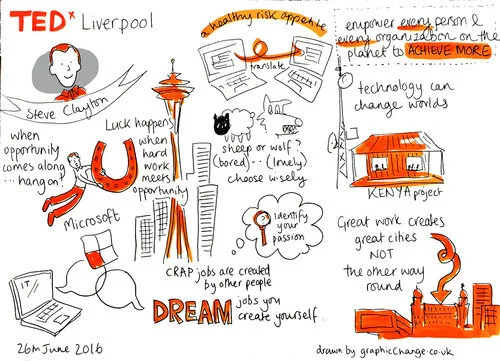
You might not have come across him before, but Steve is Microsoft’s Chief Storyteller. I kid you not. How cool a job does that sound?
Here’s a sketchnote I did of one of Steve’s talks:
Now stories can be big and they can be small, and it can be easy to under appreciate small stories when you’re focussing on the big launch or event that’s just around the corner. A small story might not have an obvious impact, but collectively these small stories all add up to something bigger: A way of doing business that puts value in the story of the team meeting, as well as in the shiny new product launch.
Graphic Recording, or its scrappier sibling Sketchnoting, is one type of functional storytelling that you can introduce to your organisation.
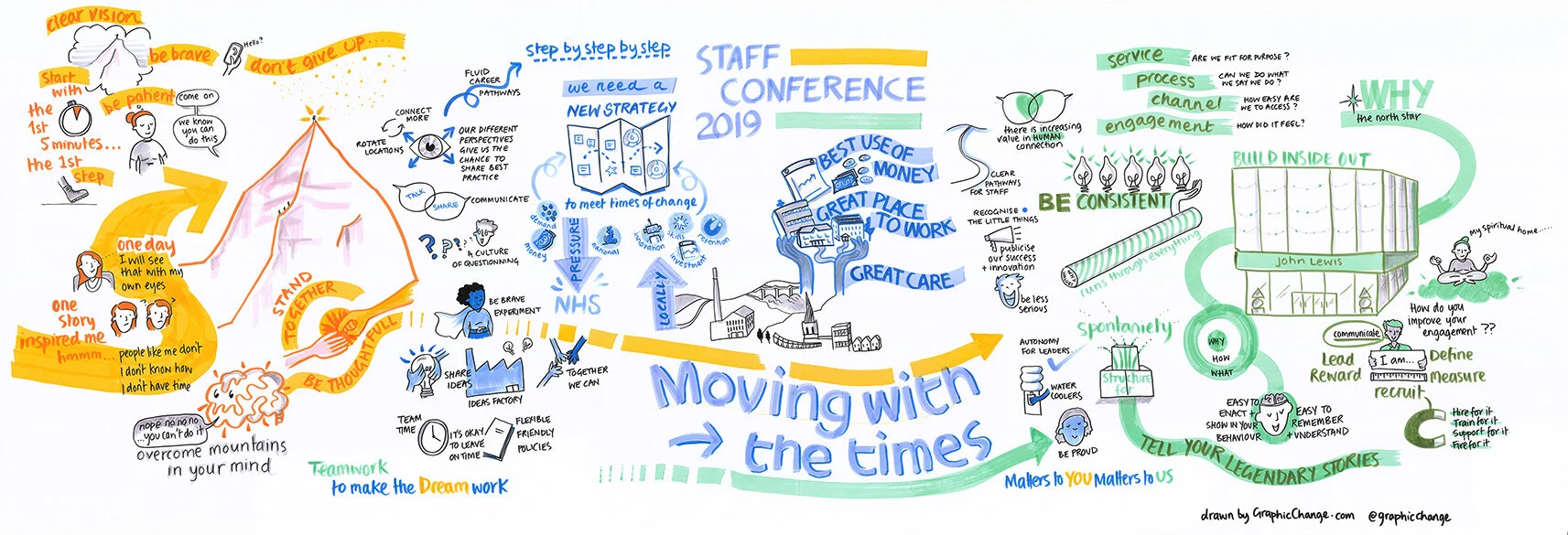
Graphic Recording turns the conversations, ideas and actions from a meeting or event into a memorable visual record. Rather than one-dimensional minutes, a graphic recording creates a story that is much more likely to be remembered and talked about. It’s a way to keep your everyday workplace stories alive, active and valued way after the meeting is over and the actual conversation is forgotten. Put simply: you’re much more likely to view, remember and retain a graphic record than written minutes.
What can I do?
In the same way that we don’t recruit storytellers, we don’t often recruit graphic recorders (though that is changing, with some organisations like Boeing, Deloitte, KPMG all having in-house graphikers)… so what can you do?
1. Train yourself or your team
We have self led courses such as Visual Meetings and Visual Storytelling that will teach you some core visual tools you can start applying straight away. We also have a 2 day introduction to working more visually (Draw a Better Business), which will get a group of you up to speed with the basics.
2. Grow your own in-house graphic recorder
Graphic Recording is a great skillset to have in-house. Frankly it’s also a far more cost-effective one than paying a studio like us to graphic for you every time. We have a 12 week, tutor supported programme Be a Graphic Recorder that will skill your person or team up to practitioner level. Ongoing coaching and support is then available for regular check-ins and continued professional development.
3. Hire someone in
Of course you can always hire in someone like me to do the graphic recording for you. This can be a good solution for key meetings and events.